Tree Transplanting
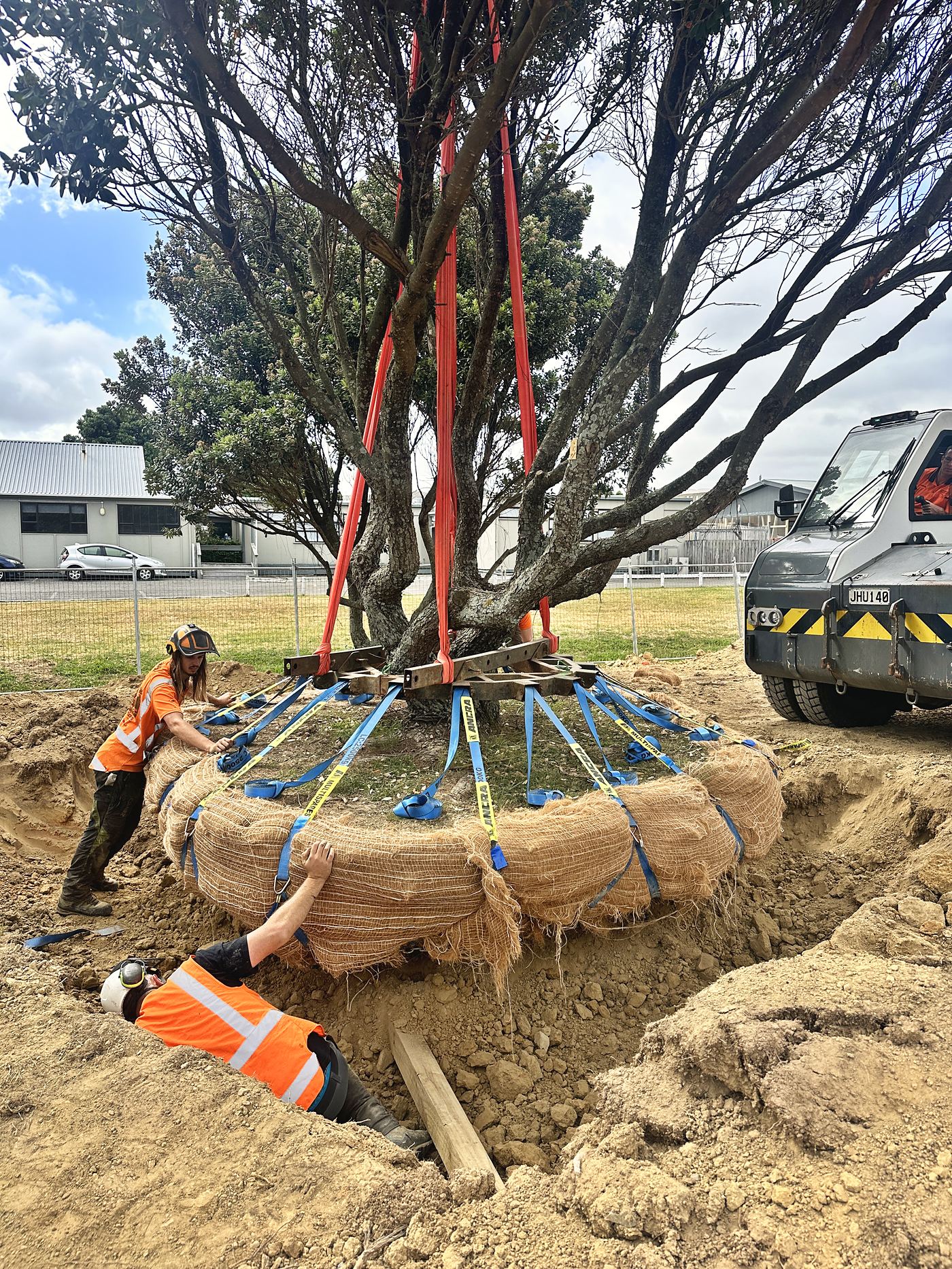
The right tree in the wrong place doesn't have to be firewood. Given the right species, size and season, an established tree can be moved and survive it.
Moving an established tree
What decides whether it will take.
Transplanting comes up more often than people expect — a development that would otherwise remove a good specimen, a tree planted too close to a building, or one with genuine sentimental value that has to move with the family.
Success turns on four things, and we'll be straight with you about all of them before quoting:
Species. Some transplant readily; some resent root disturbance and rarely recover. Fibrous-rooted species move far better than tap-rooted ones.
Size. The larger the tree, the greater the proportion of root system required to be shifted — more roots means more soil, which means more volume and weight. The bigger the tree to transplant, the bigger the equipment required, and the bigger the cost.
Season. Dormant-season moves give the tree the best chance to re-establish roots before it has to support a canopy.
Aftercare. A transplanted tree is a patient. Watering, mulching and support through the first two summers usually decides whether it lives.
Root preparation
The work that decides it starts months early.
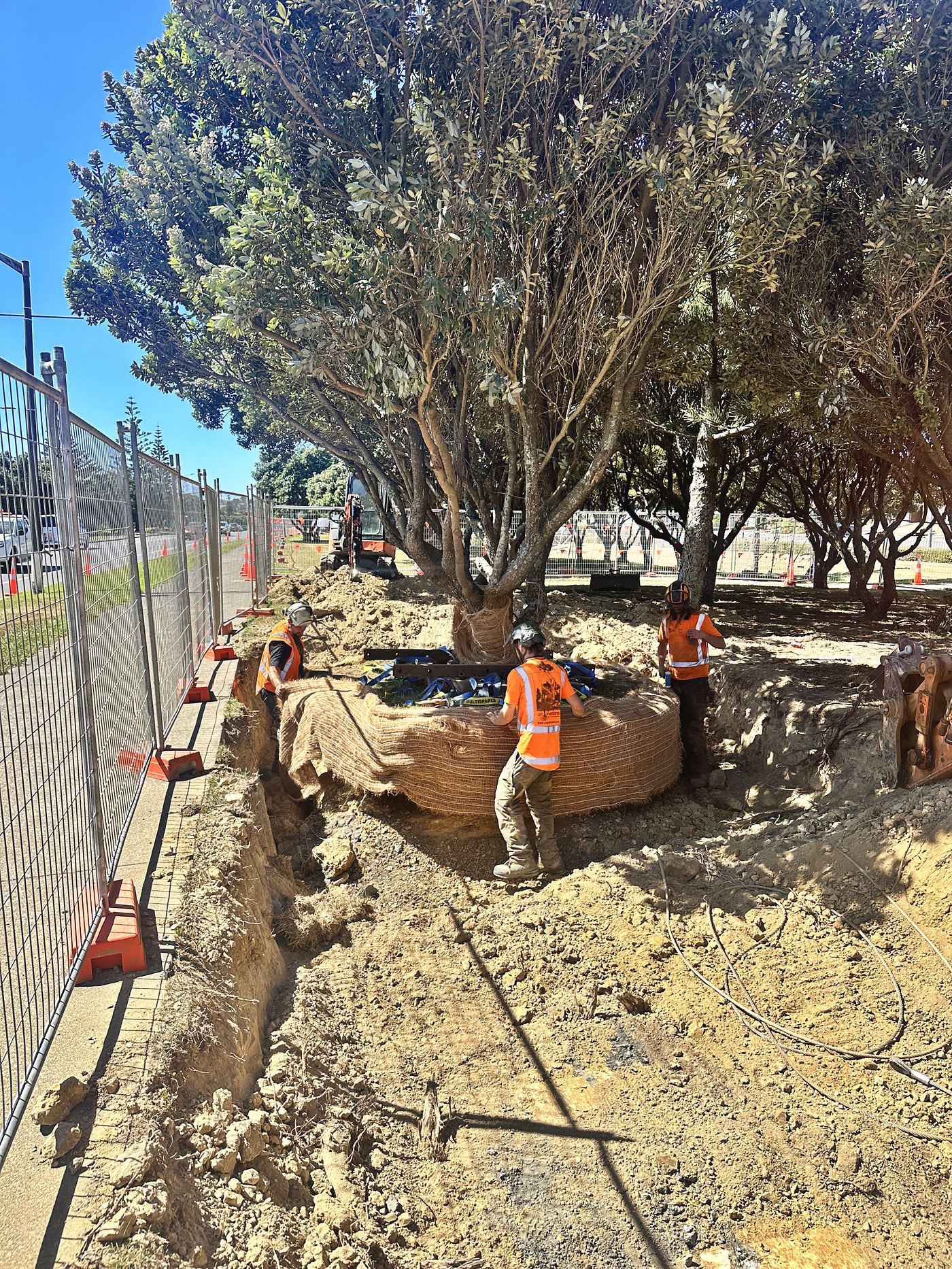
Where the tree is worth it, root preparation well in advance — severing the outer roots so the tree grows fresh fibrous ones closer to the trunk — substantially improves the odds. That takes planning, so talk to us early.
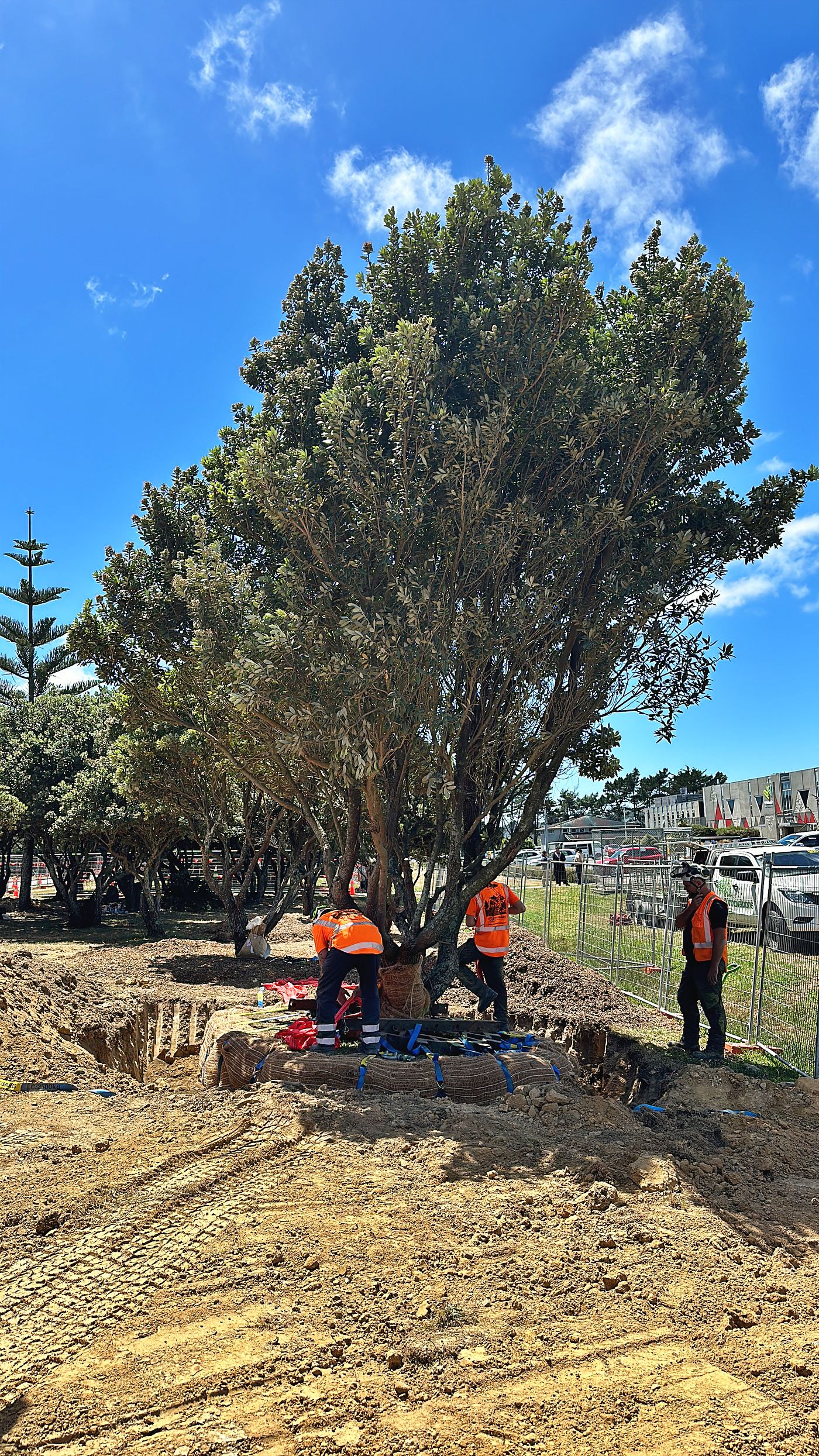
On the day, the root ball is undercut, wrapped and strapped so it travels as one solid mass. How much of the root system comes with the tree is the single biggest thing standing between a move and a survival.
The move
Lifted whole, and set down level.
With the root ball secured, the tree is lifted and walked to its new position. The receiving hole is prepared first — wide rather than deep, with the root flare finishing at the height it sat at before. Planting a transplant too deep is one of the most common ways to lose one.
After that it is watering, mulching and support through the first two summers, and a written aftercare schedule so nothing is left to memory.
Common Questions
Frequently asked
Can any tree be transplanted?
No. Species, size, health, season and both sites all matter. We assess honestly and will tell you when the odds are poor and replanting would serve you better.
What's the best time of year?
The dormant season — roughly late autumn through winter — gives the tree the longest run to re-establish roots before summer demands water from a canopy it can no longer fully supply.
What aftercare is needed?
Consistent watering through the first two summers, a proper mulch ring, and often staking or guying. We leave a written aftercare schedule — following it is the single biggest factor in survival.