Tree Pruning
Good pruning is judged by what's left standing, not by what's on the ground. Every cut is a wound, so we make as few as the job needs and each one in the right place.
What we do
Pruning that suits the tree, not just the calendar.
Pruning covers a lot of ground, and the right approach depends on the species, its age and what you're trying to achieve. The common types of work we carry out:
Formative pruning — shaping a young tree so it grows with sound structure and needs less intervention later. The cheapest work you will ever do on a tree.
Crown lifting — removing lower branches to give clearance over a footpath, driveway or roof.
Crown reduction — reducing the overall size of the canopy while keeping the tree's natural form. Done properly this is not topping.
Crown thinning — selectively removing branches to let light and wind through without changing the outline.
Deadwooding — taking out dead, diseased or damaged limbs before they fall.
Fruit tree pruning — managing height, airflow and fruiting wood so you can actually reach the crop.
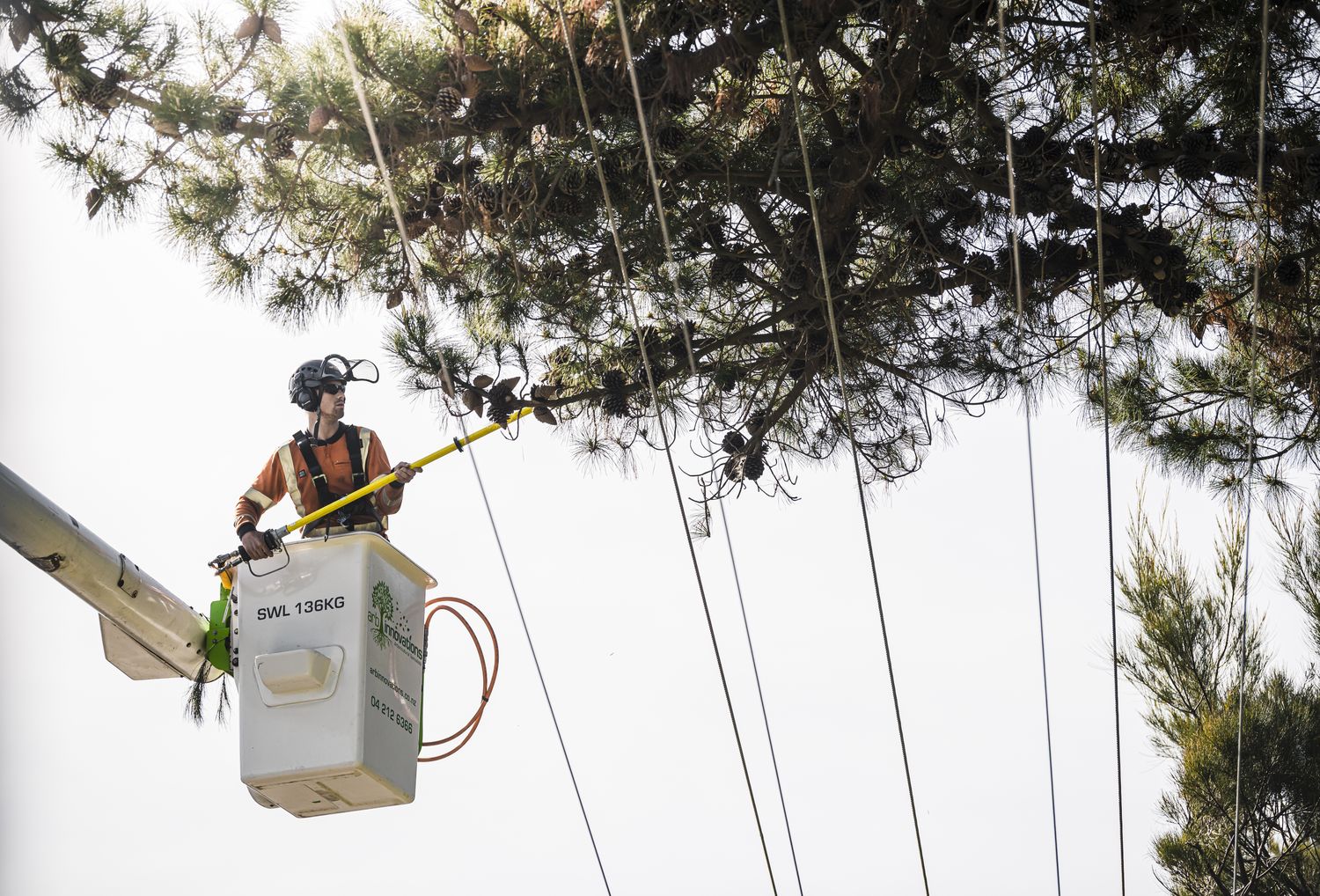
Pruning near power lines — clearance work within four metres of the network, which by law only an approved contractor may carry out. We hold approval on both networks covering the lower North Island.
Timing matters. In some species sap flows heavily if cut at the wrong time of year, some are far more vulnerable to infection in wet conditions, and some flower on wood that a poorly-timed cut would remove. A qualified arborist will tell you when the work should happen, even when that means waiting.
We don't top trees.
Topping — cutting a tree back to stubs with no regard for its structure — is not a recognised arboricultural practice. It removes the leaf area the tree needs to feed itself, forces a flush of weak regrowth attached only to the outer wood, and leaves large wounds that decay inward. The tree comes back denser, weaker and more dangerous than before, and it will cost you more to manage for the rest of its life.
If a tree genuinely is too large for its position, the honest answers are a properly specified reduction, or removal and replanting with something suited to the space. We'll tell you which.
Common Questions
Frequently asked
How often should a tree be pruned?
It depends entirely on species, age and purpose. A young tree being formatively pruned might be looked at every two or three years; a mature tree in good health may need nothing for a decade. Trees near power lines are governed by clearance rules rather than preference.
Will pruning damage my tree?
Sound pruning won't. Every cut is a wound, so the aim is to make the fewest cuts that achieve the objective, in the right places, at the right time of year. Over-pruning and topping do cause lasting harm.
Do I need council consent to prune?
You may. Protected, notable or scheduled trees, and trees within a heritage area or on a development site, are often covered by district plan rules. We'll check before we quote and can prepare the arborist report if consent is needed.