Land clearing
Clearing a site is straightforward until you have to keep something. The value is in knowing what stays, and protecting it properly while everything else goes.
Scale
From a motorway corridor to a single section.
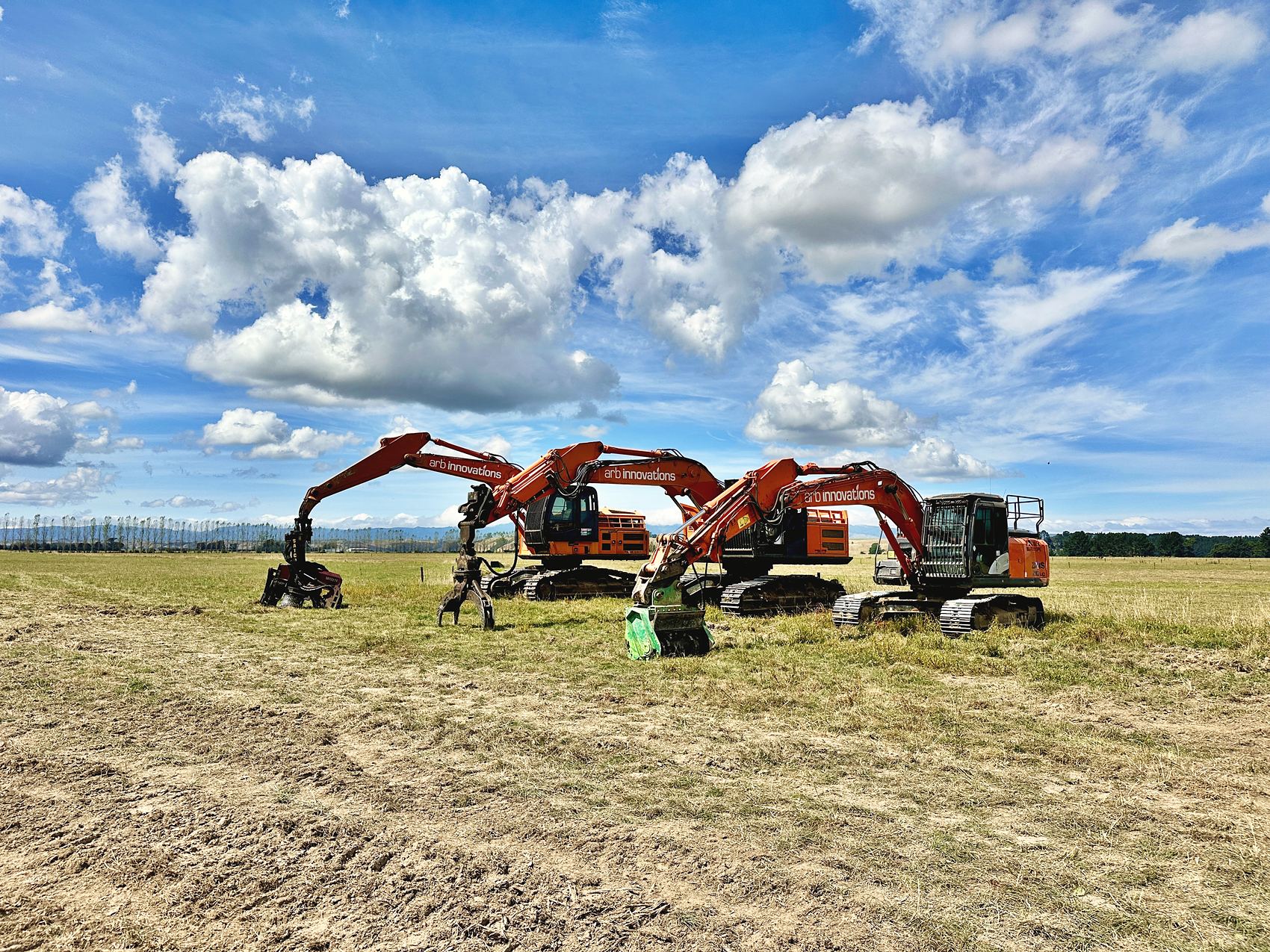
We clear at both ends of the range. Motorway and roading corridors, subdivision earthworks and forestry blocks at one end; a single overgrown section, a driveway line or a firebreak at the other. What changes between them is the plant we put on it, not the standard it is done to.
Our own excavators, chippers and tip trucks mean we're not subcontracting the heavy end, and where a crane is warranted we bring one in.
Motorway, roading and utility corridor clearance
Development site clearance, sequenced around retained trees and protection zones
Access tracks, driveways and firebreaks
Scrub, gorse and regenerating vegetation
Post-harvest and shelter belt removal
Full processing on site — chipped, mulched or removed
The plant
Sized to the job, not the other way round.
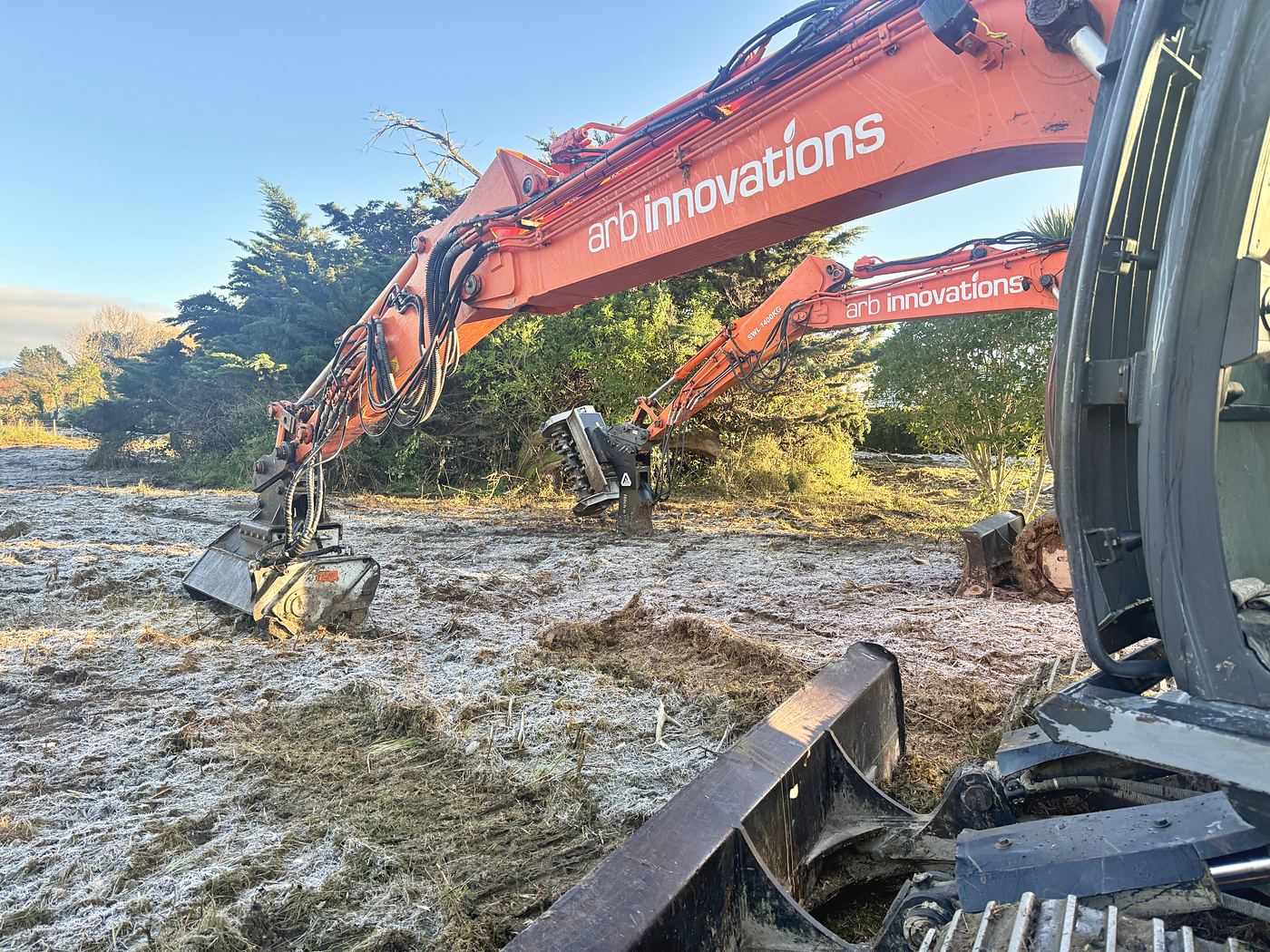
High production chipping is where volume clearing is won or lost. Our largest chippers are in the 600 horsepower class — big enough that the excavator feeding them is the limiting factor, not the chipper.
For standing scrub and small stems we run fixed tooth mulching heads on the excavators, mulching material where it stands instead of handling it twice. For gorse and pasture clearing we use posi-track mulchers: low ground pressure, so soft paddocks and re-grassing country come through the job intact.
Roading and motorway
Corridor work, on a live road.
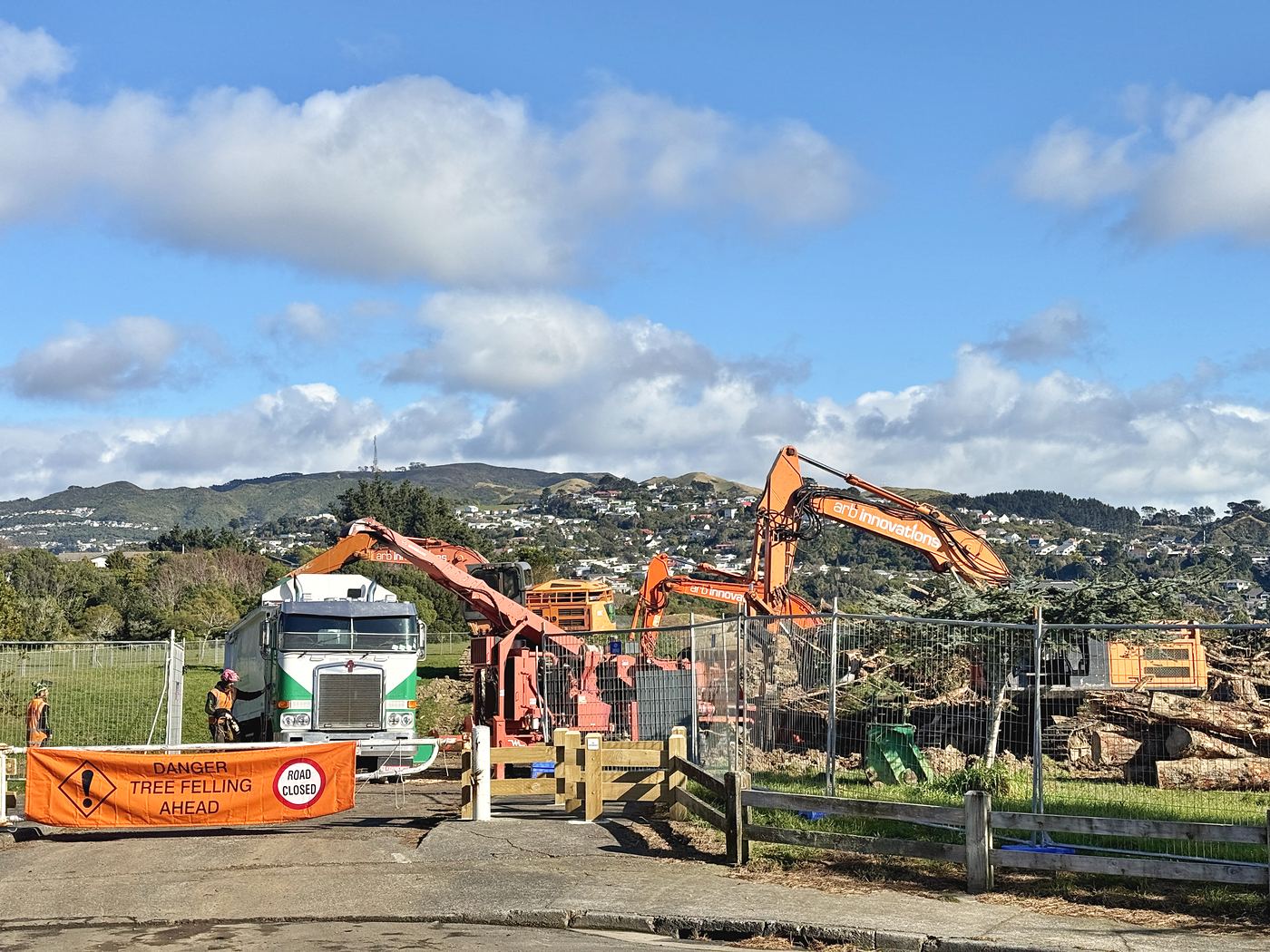
Clearing a roading or motorway corridor is a different discipline to clearing a paddock. It happens beside live traffic, to a programme somebody else sets, with closures and signage that have to be in place before a saw starts.
That side of it gets planned as carefully as the felling — traffic management to the corridor's requirements, and the clearing sequenced around the windows we are given.
The documentation that comes with corridor work is handled by our in-house HSEQ coordinators — the safety plans, inductions and training records a principal contractor audits before anyone is allowed on site, for our own crews and for any subcontractor working under us.
What stays, and how it survives.
Most clearing jobs come with retention obligations — a protected tree, a consent condition, a boundary planting the neighbours care about. The damage that kills those trees usually isn't the chainsaw; it's machinery compacting the root zone, or a level change that buries or exposes roots.
Where trees are being retained we set out and physically protect the root zone before machinery arrives, and where a consent requires it we can provide the monitoring and supervision as well as the clearing. Doing both means the person protecting the tree isn't arguing with the person operating the digger.
On site
The material does not have to leave.
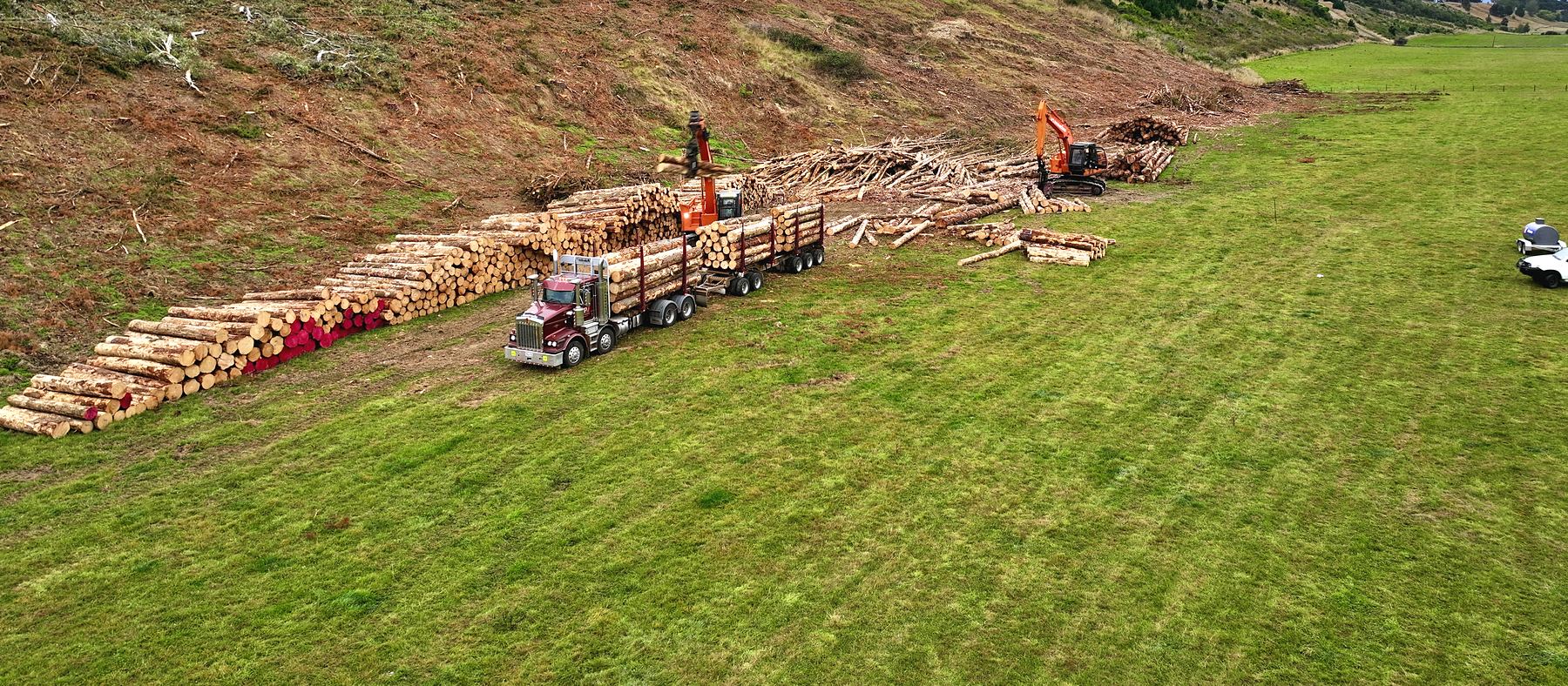
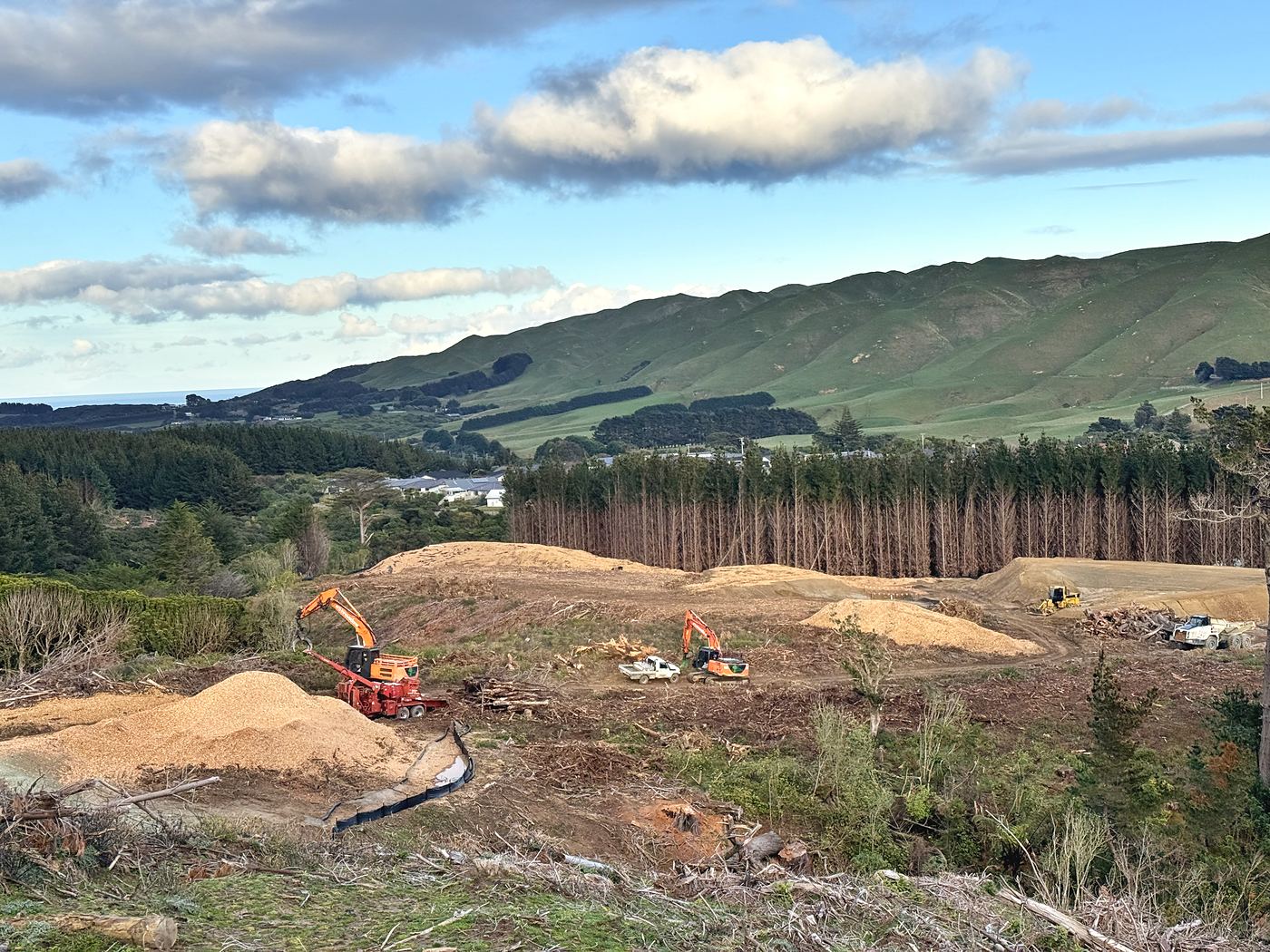
Most of what comes off a clearing job can stay on it — chipped and spread as mulch, windrowed, or stockpiled for the landscaping that follows. Carting material away is a cost, and often an avoidable one.
Millable timber is cut and set aside, larger material can be processed to firewood, and the rest is mulched down rather than burned.
Common Questions
Frequently asked
Do I need consent to clear vegetation?
Frequently, yes. District plans control clearance by area, slope, proximity to waterways and vegetation type, and rules vary between councils. Check before you start — retrospective consent is expensive.
What happens to the material?
Usually chipped on site and either left as mulch or carted away. Millable timber can be cut and set aside; larger material can be processed to firewood.
Can you work around protected trees?
Yes, and it's a large part of what we do. We set out and protect root zones before machinery arrives and can provide the monitoring a consent condition requires.