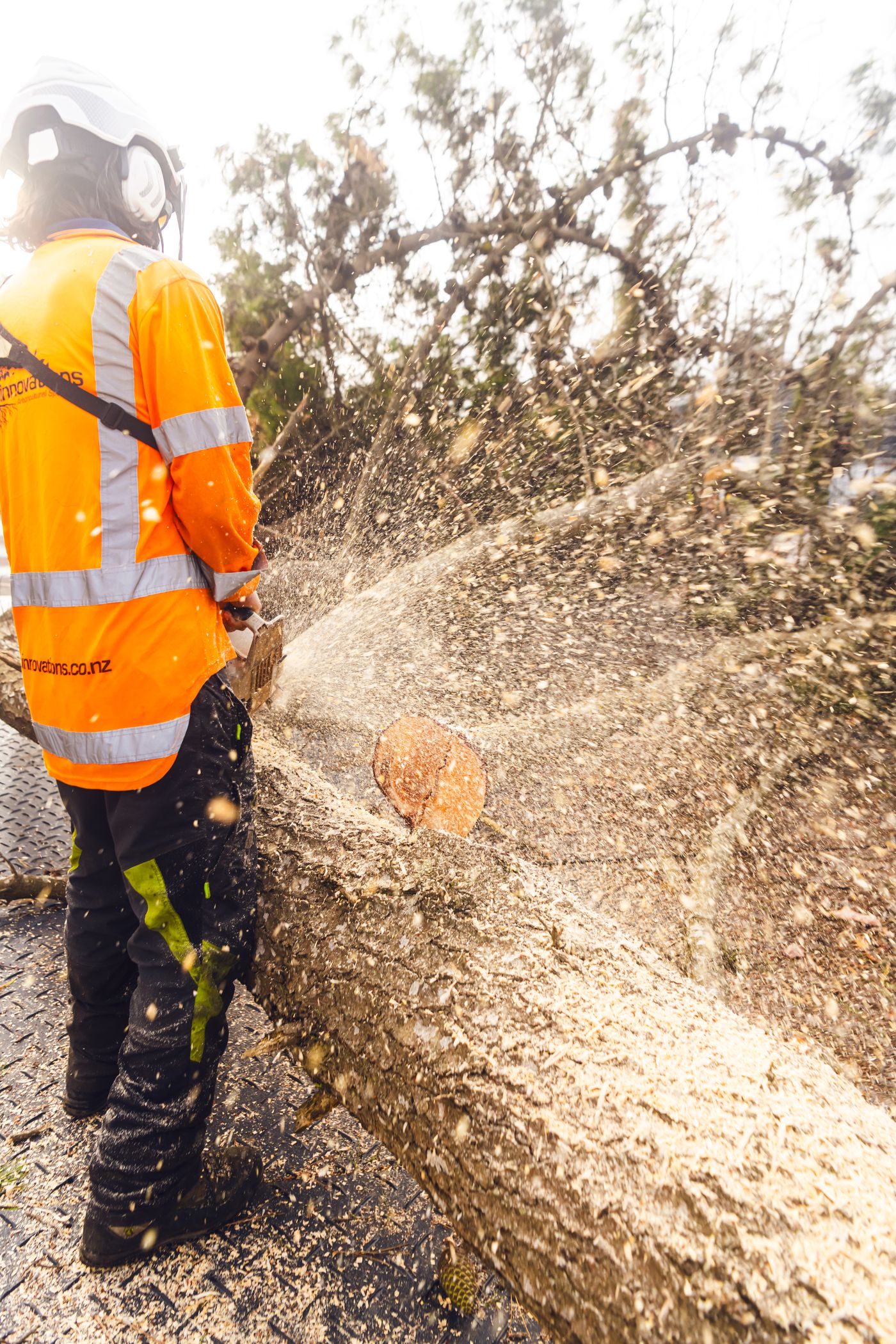
Tree Removal
Sometimes removal is the responsible answer. When it is, the question becomes how to get several tonnes of timber to the ground without touching anything you care about.
When removal is the right call
Removal is a decision, not a default.
We would rather retain a tree than take it out, and a good arborist will tell you when a tree can be saved. But there are situations where removal is genuinely the responsible course:
Disease or decline — where the tree is dying, or a pathogen risks spreading to healthier trees nearby.
Structural failure — significant decay, included bark unions, root plate movement or storm damage that can't be mitigated by bracing or reduction.
Conflict with structures — roots lifting foundations or drains, or a canopy in unavoidable conflict with a building or lines.
Wrong tree, wrong place — a species that will never suit the space, where replanting is the better long-term answer.
Development — where consented works make retention impossible.
Whichever applies, we'll assess it first and put the reasoning in writing if you need it — for your own records, for a neighbour, or for a council application.
How
Sectional dismantling, and why it costs what it costs.
Very few trees in urban environments can simply be felled in one piece. Most are close to a house, a fence, a garden, a road or a set of lines — so the tree comes down in sections, each one lowered under control on rigging lines.
That's what drives the price. A tree in a paddock could be a less complex task. The same tree overhanging a conservatory, with a neighbour's glasshouse behind it and a service line through the canopy, is a rigging problem that takes a crew, a plan and considerably more time.
Where access and weight make rigging impractical, we use a crane — often faster and less disruptive on a tight site, and safer for everyone involved.
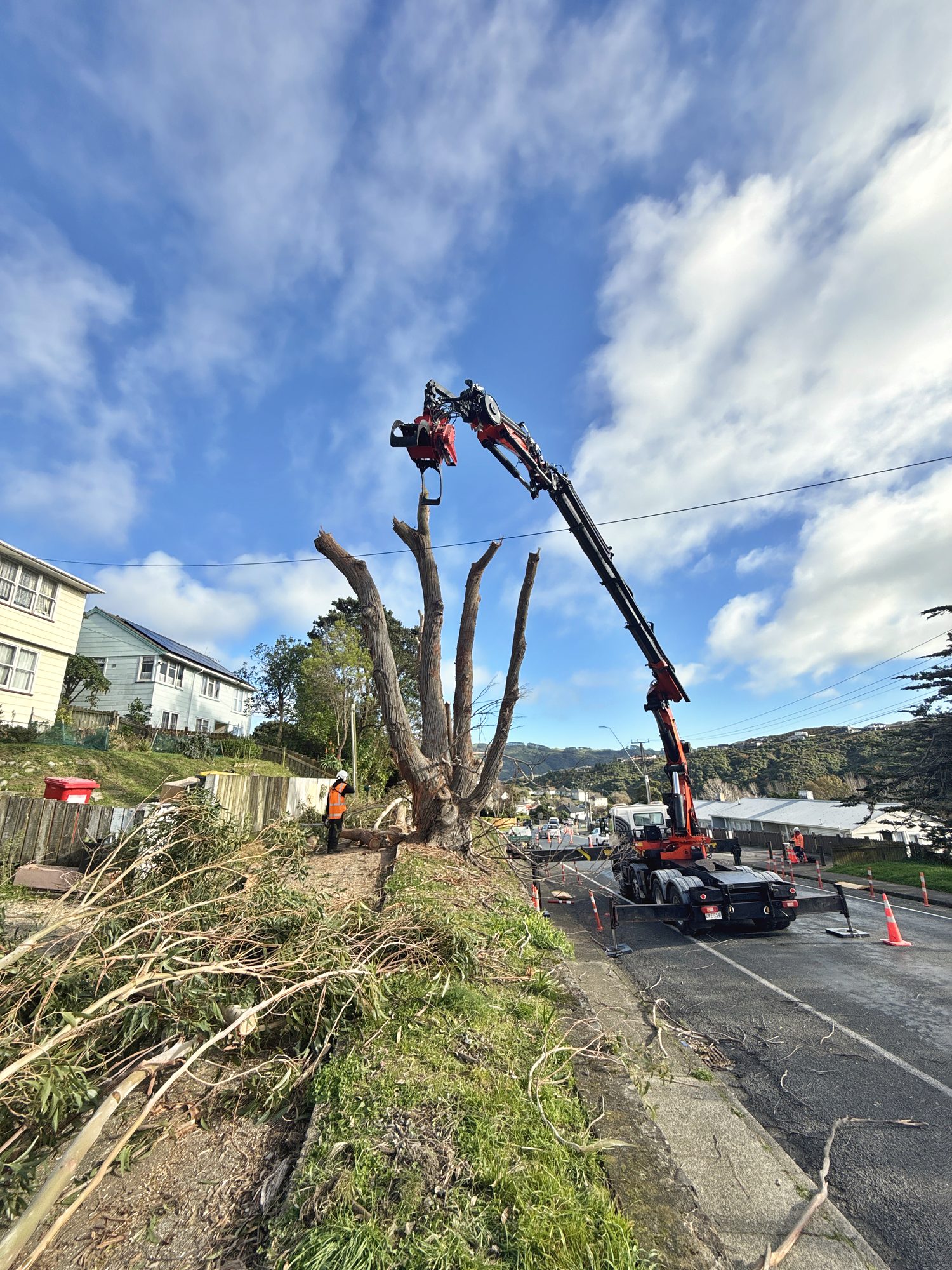
Specialist plant
The only dedicated grapplesaw truck in the lower North Island.
A grapplesaw is a truck-mounted knuckle boom crane with a hydraulic grab and a chainsaw built into the same head, worked by remote control from the ground. It takes hold of a limb, cuts it, and lifts the section clear in one movement. A saw attachment can be fitted to any general-purpose hiab; ours is the only unit in the lower North Island dedicated to tree work, and it is run by our own arborists.
No climber in the tree
Dead, decayed and storm-damaged trees are the ones most likely to fail under a climber. The grapplesaw takes them apart with nobody in the canopy.
Reach from the road
Sections are lifted out over roofs, fences and planting and set down on the hardstand, rather than lowered down through the tree.
Nothing is dropped or swung
Each piece is gripped before the cut and stays held until it's placed. Conservatories, decking, pools and gardens stay untouched.
One motion instead of four
Grip, cut, lift, place — no rigging setup and no re-rigging between cuts. On the right tree it halves the time on site.
Shorter road closures
Faster cycles and a smaller ground crew mean narrower traffic management windows on street and berm trees.
It isn't the answer to every tree.
The truck needs somewhere to set up within reach of the tree — road frontage, a driveway or a hardstand that will take the outriggers. On a tight rear section with no vehicle access, a climber and rigging lines are still the right call, and usually the cheaper one.
We'll tell you which approach a job needs when we quote it, and why. Where the grapplesaw turns a two-day rigging job into a day, that shows up in the price.
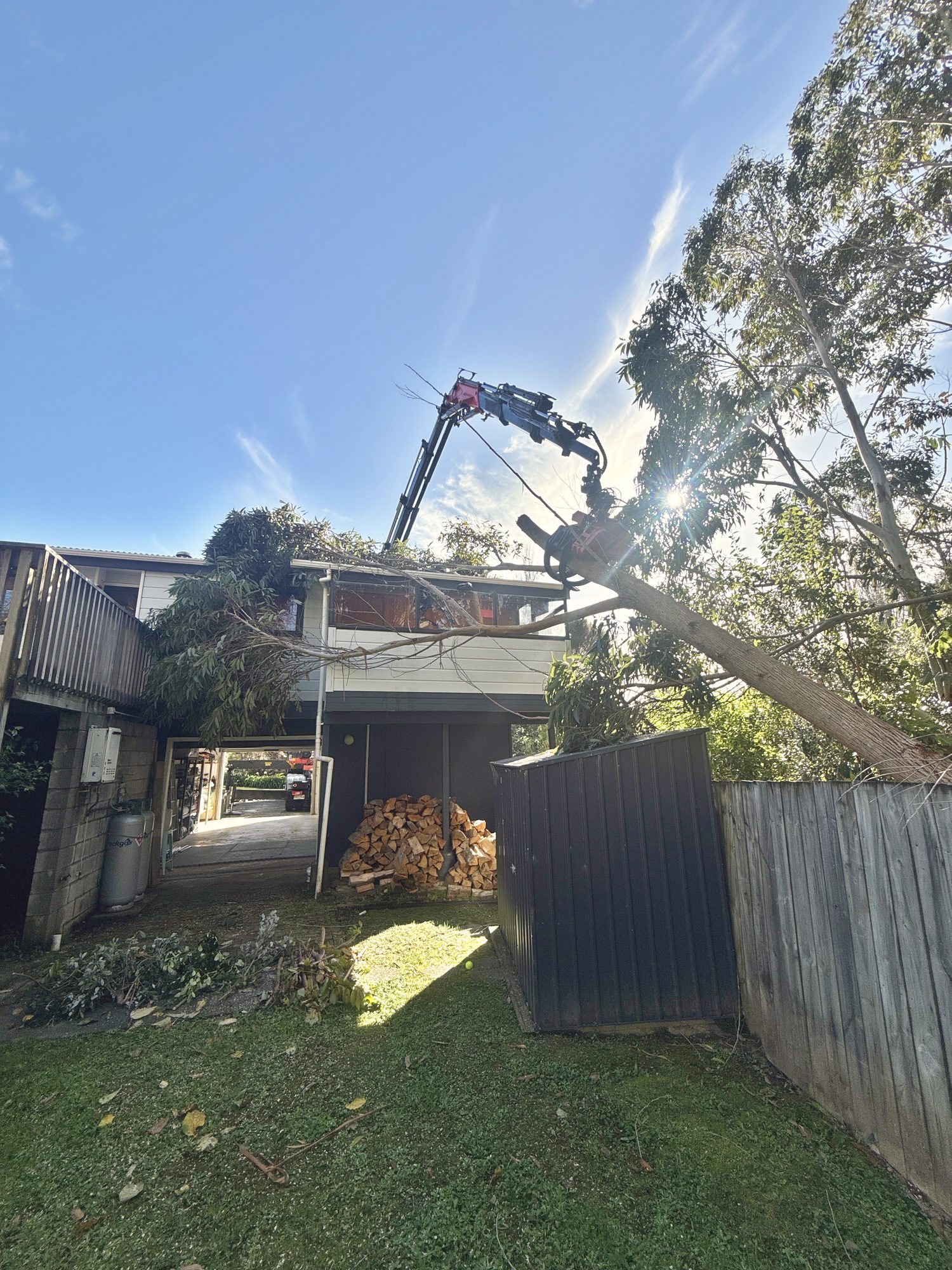
What we leave behind.
Removal includes clearing up after ourselves. Arisings are chipped and taken away, or left as mulch if you want them. Timber can be cut to firewood lengths and stacked on request. Stump grinding is quoted separately because not everyone wants it — if you plan to replant in the same spot, you'll need it.
Common Questions
Frequently asked
Do I need council permission to remove a tree?
Often, yes. Many councils in the region protect trees by species, size, location or heritage listing, and rules differ between districts. We check the district plan before quoting and can prepare the arborist report a consent application needs.
What does tree removal cost?
It depends on size, species, access and what's underneath. A small tree in an open garden is a straightforward job; a large tree overhanging a house needs rigging, more crew and more time. A qualified arborist quotes on site, free of charge.
Is stump removal included?
It's quoted separately. Grinding the stump lets you replant or lay lawn over the spot; leaving it is cheaper. If you intend to replant in the same position you'll want it ground out.
Are you insured?
Yes, fully. We hold public liability cover and can provide a certificate of currency on request — most councils, developers and property managers ask for one.