Tree root protection
Trees are rarely killed by the machine that hits them. They're killed by what happens to the ground around them.
Protecting what stays
Root zones, consent conditions and construction.
Where a development retains a tree, the consent almost always carries conditions about protecting it. Meeting those conditions properly is what stops a retained tree quietly dying two years after completion — and what stops the council coming back to you.
Root protection areas calculated and set out to standard, not guessed from the drip line.
Protective fencing installed before machinery arrives, with signage and a defined no-go zone.
Ground protection where access across a root zone is unavoidable — load-spreading systems instead of tracked machinery on bare soil.
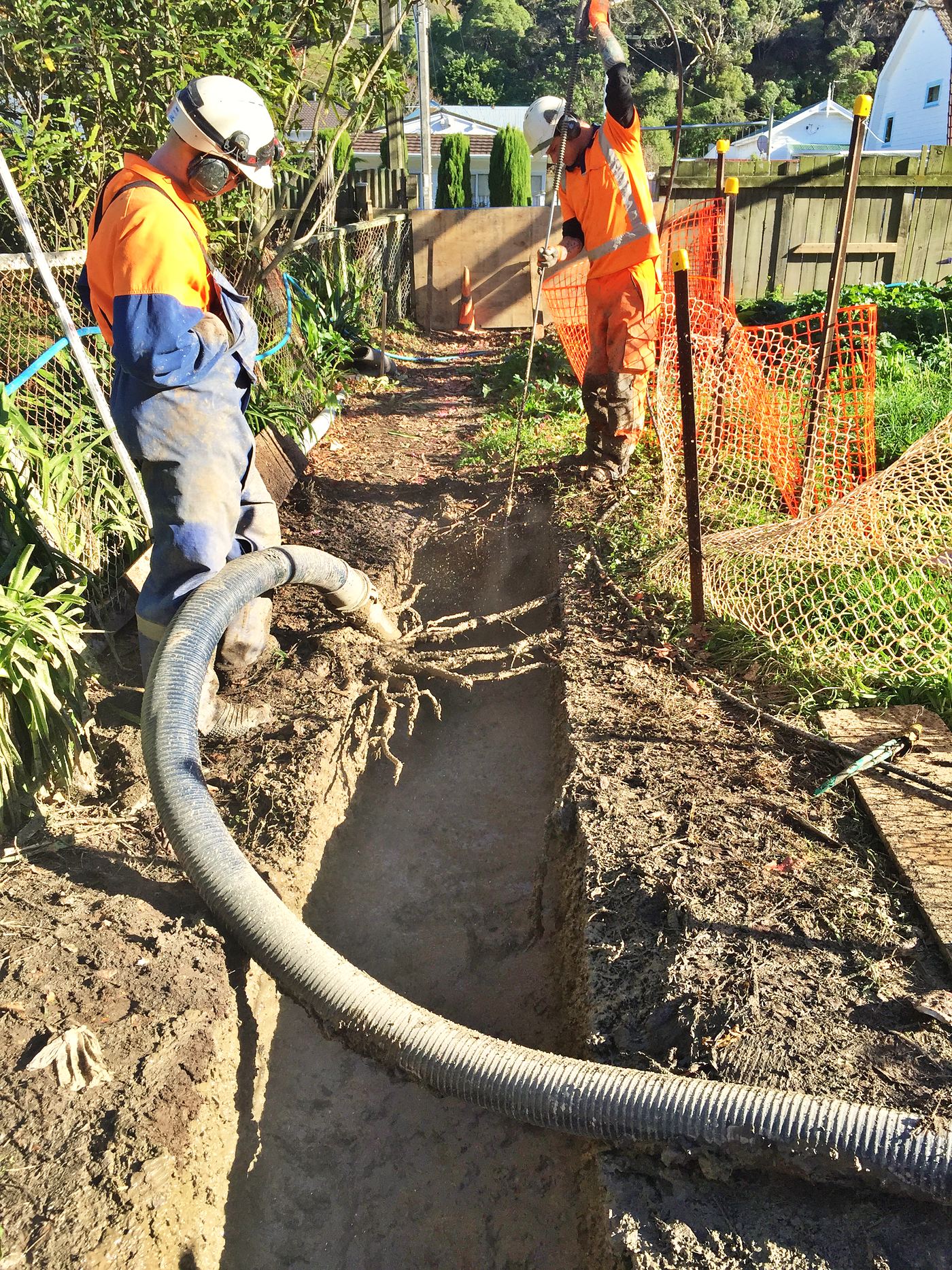
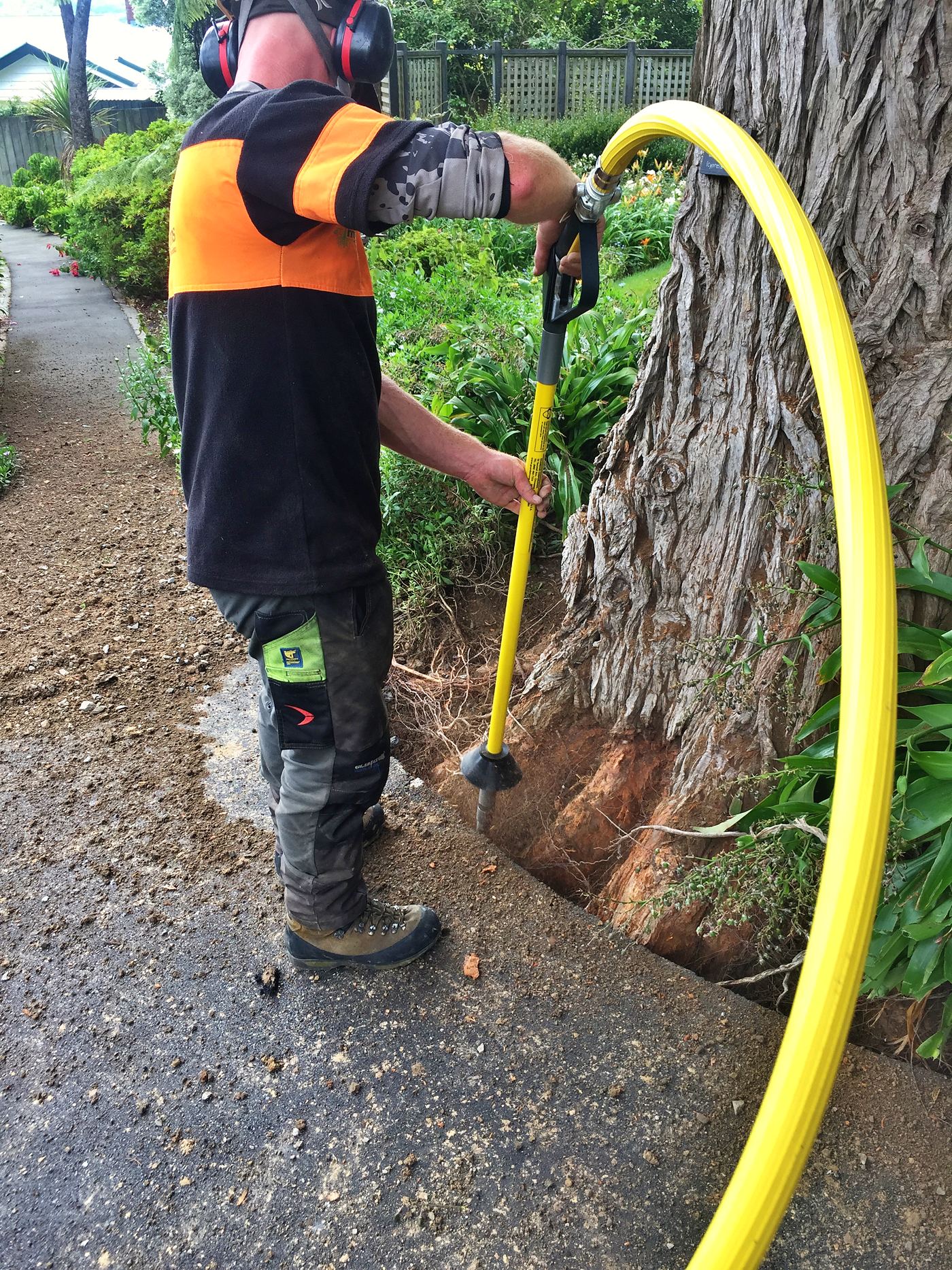
Supervised excavation where trenching must pass through a root zone, hand-digging or air-excavating so roots can be retained rather than torn.
Level change management — because raising or lowering ground level over a root zone is as damaging as cutting the roots.
Monitoring and sign-off through the build, with records for the council.
We can prepare the tree protection plan, install the protection and provide the monitoring arborist. Having the same firm do all three means the person protecting the tree is on site rather than reviewing photographs afterwards.
Supervised excavation
The trench still gets dug. The roots stay.
Services have to cross root zones. A drainage line, a power feed, a new path — the trench is going in whether the tree likes it or not, and a machine bucket takes everything in its path without distinguishing between soil and a structural root.
Air excavation strips the soil out and leaves the roots suspended across the open trench. We can see what is actually there, retain what matters, cut cleanly only what genuinely has to go, and backfill around the rest. The service gets installed and the tree keeps the roots that were holding it up.
Common Questions
Frequently asked
What is a root protection area?
A calculated zone around a tree, based on trunk diameter, within which the roots essential to its stability and health are assumed to sit. It's usually far larger than people expect, and it's rarely the same as the drip line.
Can machinery cross a root zone?
Only with proper ground protection to spread the load. Repeated tracking over bare soil causes compaction that may not show in the canopy for years.
Do I need a monitoring arborist?
If your resource consent says so, yes. Many consents require a suitably qualified arborist to supervise works near protected trees and certify compliance.