Fertilisation and watering
Feeding a tree without knowing what the soil lacks is guesswork. We start with the soil, then treat what's actually missing.
Nutrition
Diagnose first, feed second.
Yellowing leaves, small leaves, sparse canopy and dieback in the upper crown all point to a tree that isn't getting what it needs. The cause might be nutrient deficiency, but just as often it's compaction, poor drainage or root damage — and fertiliser won't fix any of those.
So the work starts with an assessment, and soil testing where it's warranted. Then:
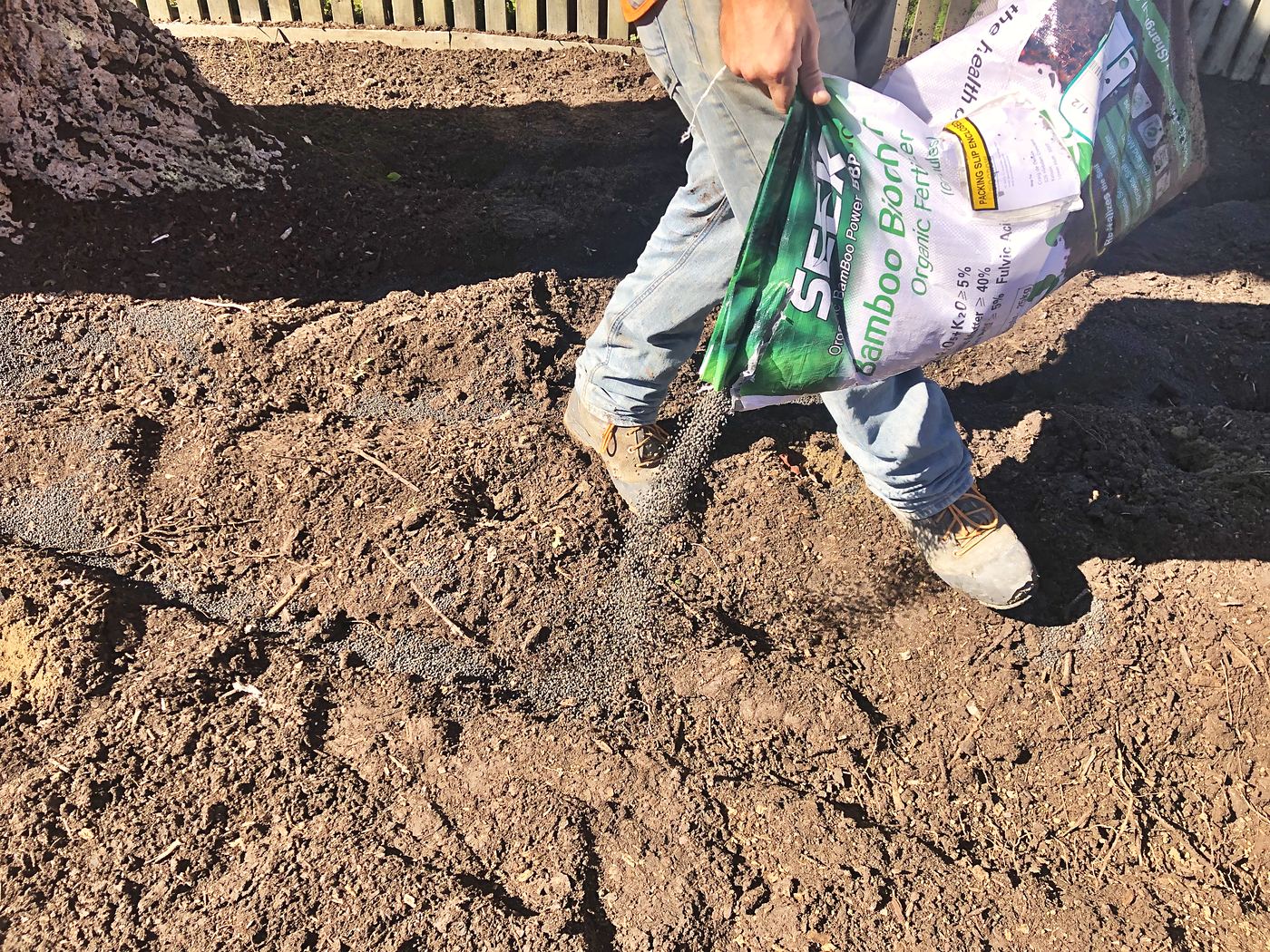
Slow-release feeding matched to species and to what the soil is short of, applied into the root zone rather than scattered on the surface.
Deep root injection to get nutrition past compacted surface layers and into the feeding roots.
Biostimulants and mycorrhizal inoculation to restore soil biology on sites where it's been stripped out.
Irrigation programmes for newly planted and transplanted trees through their establishment years, and for mature trees in drought.
Newly planted trees are the most common casualty we see. A tree planted in autumn with no watering plan for its first two summers is a tree with poor odds, however good the stock was.
Deep root feeding
Into the root zone, without a shovel.
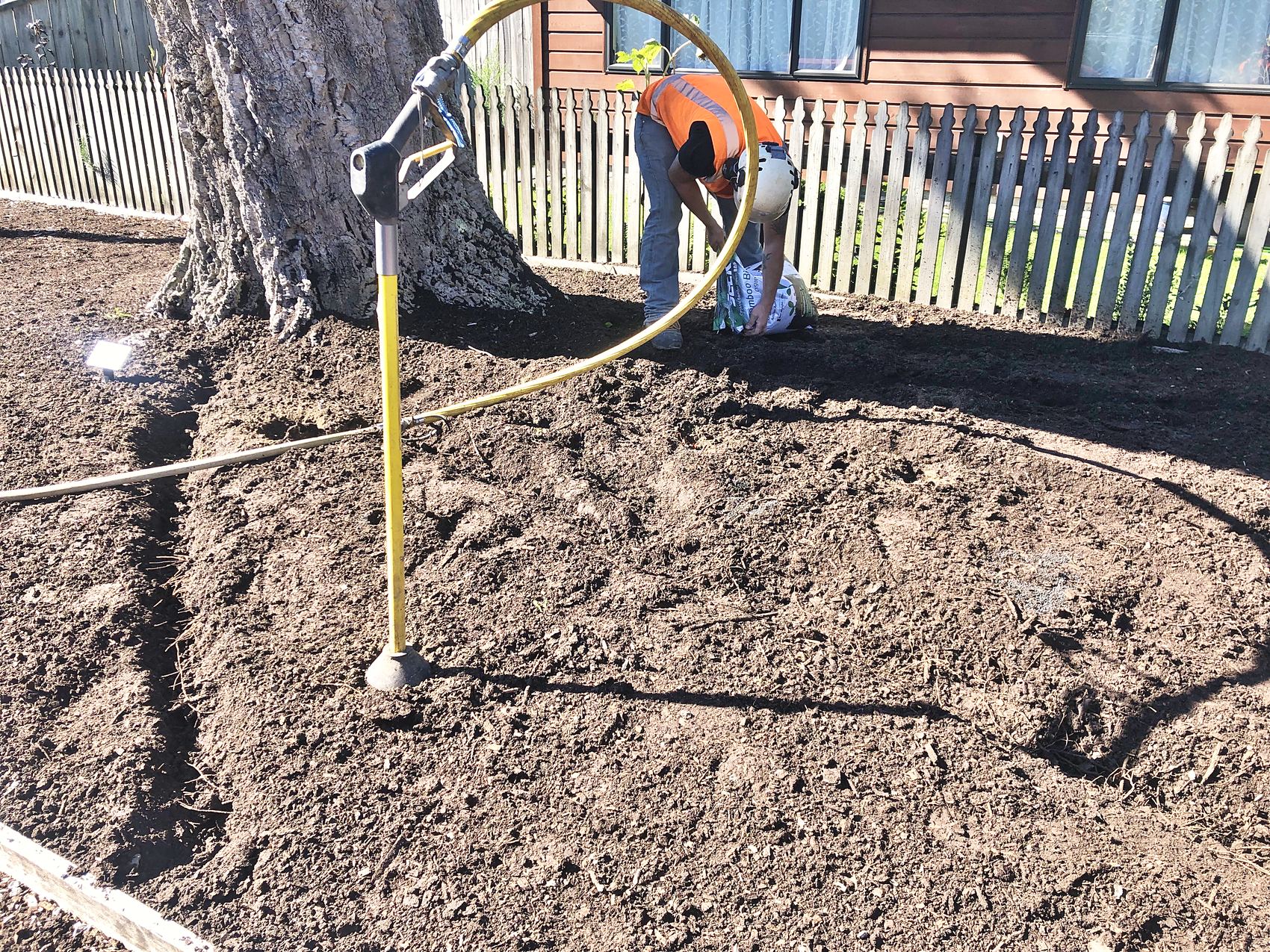
Fertiliser spread on the surface mostly feeds the lawn. Getting nutrition to a tree means getting it down into the root zone, past the compacted layer the feeding roots are stuck underneath.
We use an air spade for that — a compressed air tool that excavates soil without cutting roots. It opens the ground exactly where we need it, lets us see what is actually down there before we treat it, and backfills with something the roots can grow into. Non-intrusive, so the tree does not pay for the access.
Through summer
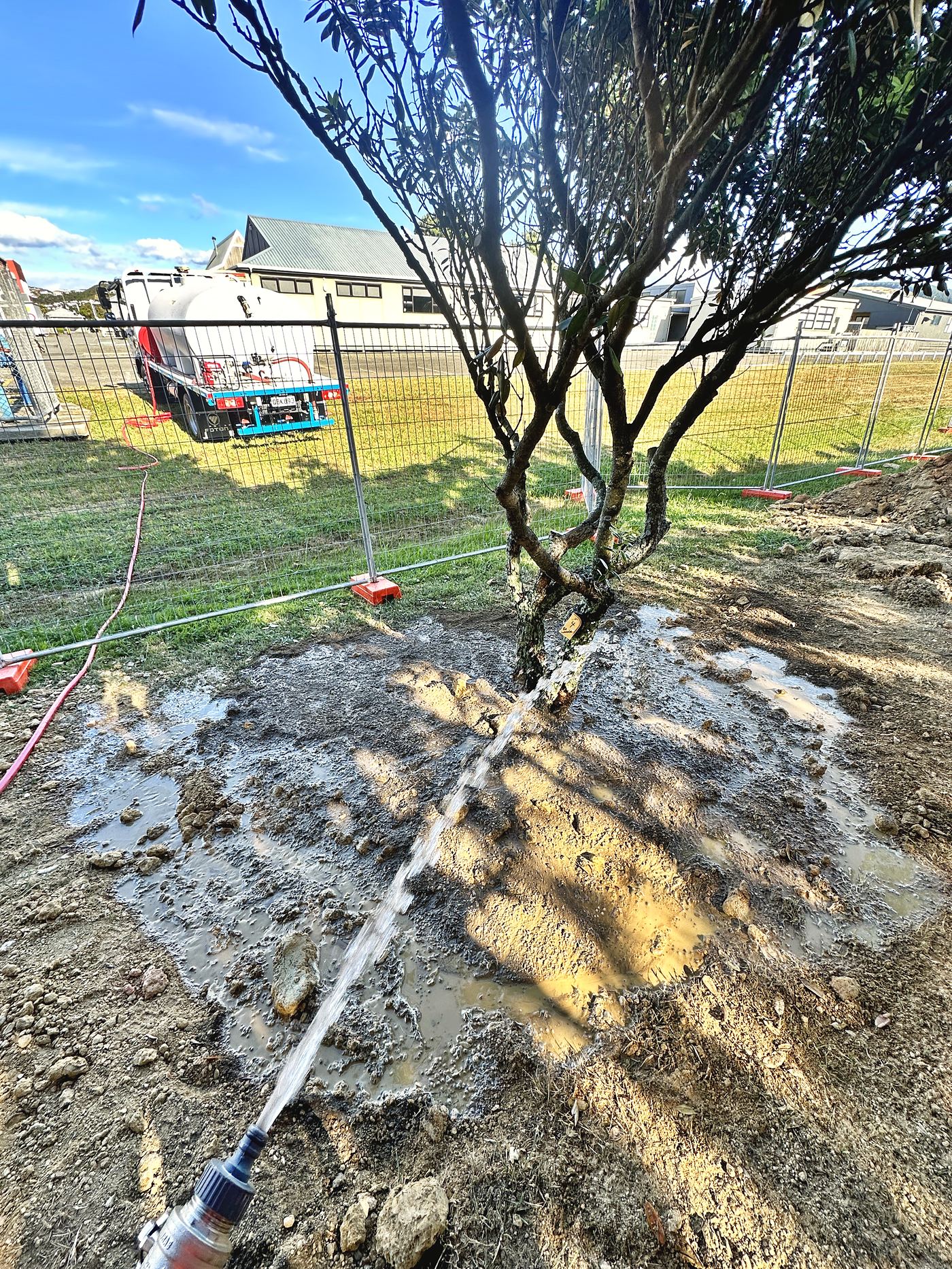
Our own water truck, for the months that decide it.
A newly planted or recently transplanted tree needs water through its first two summers, and Wellington summers are drier and windier than most planting plans allow for. A hose rarely delivers the volume a mature root zone actually needs.
We run our own water truck, so a summer watering programme is something we schedule rather than something you have to organise. Deep and infrequent is the rule — enough to wet the whole root zone, not just darken the surface.
Common Questions
Frequently asked
How do I know whether my tree needs feeding?
Signs include undersized or off-colour leaves, sparse canopy, dieback in the upper crown and poor annual growth. But those symptoms have several possible causes, so an assessment comes first — feeding a tree whose real problem is compaction achieves nothing.
When is the best time to fertilise?
Generally late winter to early spring, as the tree comes into growth and can use it. Autumn applications suit some situations. It depends on species, soil and what we're correcting.
How much water does an established tree need?
Less often and more deeply is the rule. Frequent light watering encourages shallow rooting, which makes a tree more vulnerable in drought. Newly planted and transplanted trees need a consistent programme through their first two summers.