Tree soil care
You can't fix a tree by working on the part you can see. Where a tree is declining without obvious cause, the answer is nearly always in the soil.
Compaction
The most common cause of urban tree decline.
Tree roots need air. Soil that has been driven over, parked on, walked across or built around loses its pore structure, and roots suffocate. It is slow, invisible and by far the most frequent reason a mature tree starts to decline for no apparent reason.
Construction is the usual culprit, and the damage often shows three to five years after the builders have gone — long enough that nobody connects the two.
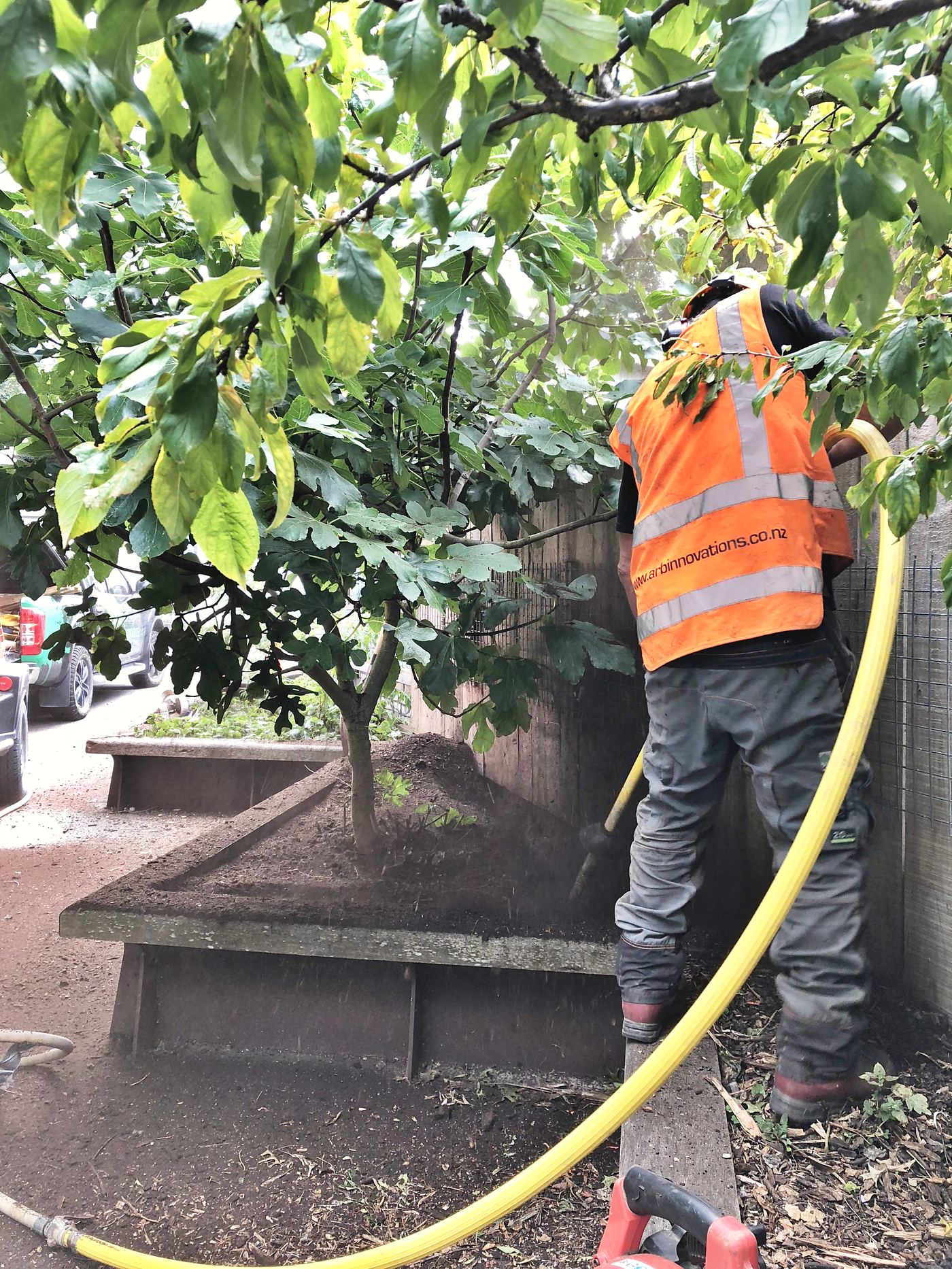
Air-tool decompaction — using compressed air to fracture compacted soil without severing roots.
Soil amendment — introducing organic matter, biochar or compost into the fractured zone.
Vertical mulching and radial trenching — creating channels for air, water and root growth through hard ground.
Drainage assessment — because waterlogging kills roots as effectively as compaction.
Root collar excavation — exposing a buried root flare, which is a surprisingly common and entirely fixable problem.
Air tooling
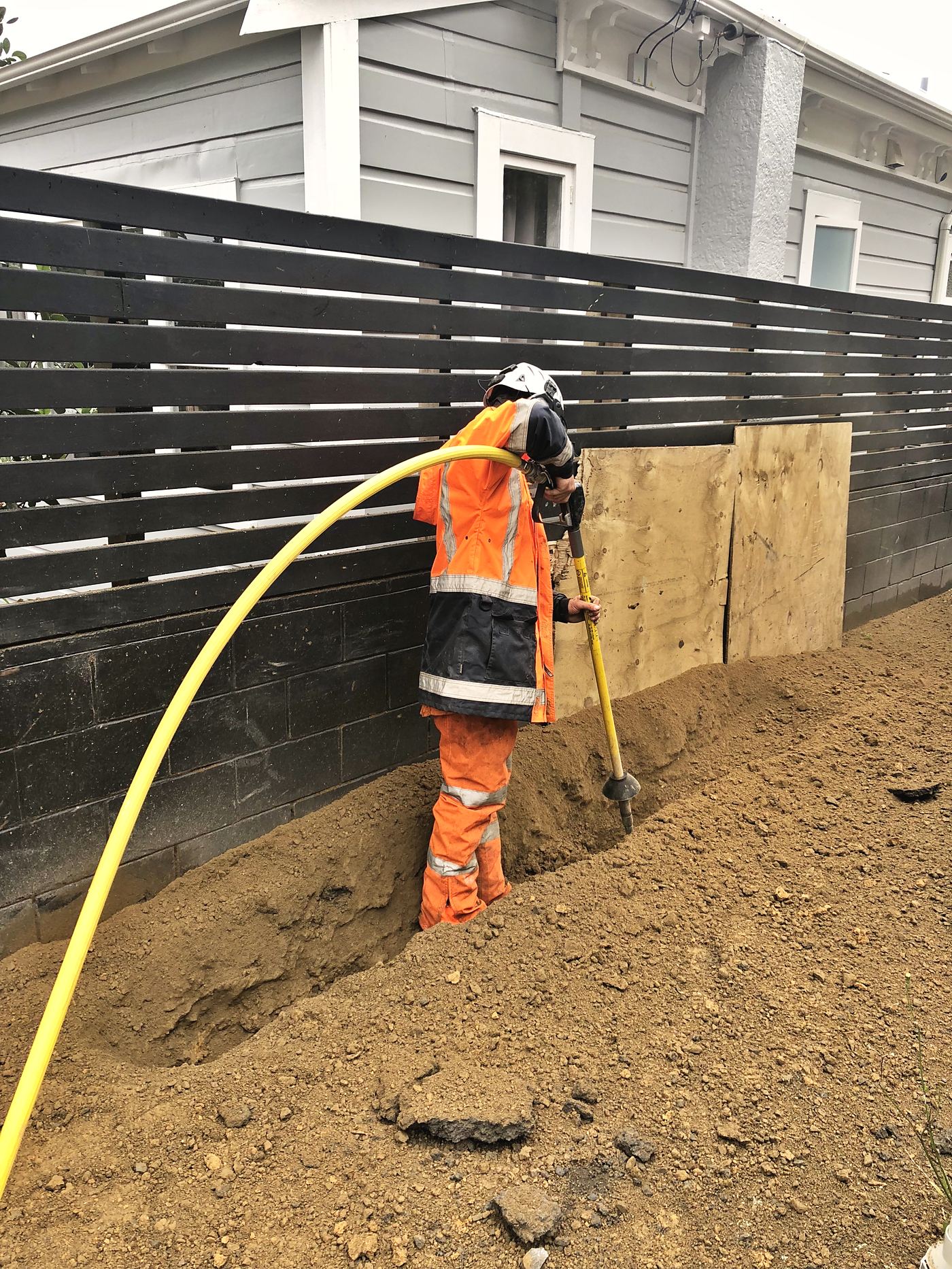
Air goes around a root. A blade goes through it.
That is the whole reason this work is done with compressed air rather than a digger or a fork. The jet fractures compacted soil and blows it apart, and the roots are left standing in the space where the soil used to be. Nothing structural gets cut.
Compaction is rarely even, either. It concentrates where people and vehicles go — the parking spot under the tree, the worn path across the root zone, the strip where the scaffolding stood. Those are the areas worth opening, and once they are open we can see what the ground actually needs before deciding what to put back.
Common Questions
Frequently asked
How can I tell if my soil is compacted?
Common signs are water pooling or running off rather than soaking in, difficulty pushing a probe into the ground, sparse grass, and a mature tree in gradual unexplained decline.
Will decompaction damage the roots?
Air-based tools fracture soil without cutting roots, which is exactly why we use them near valuable trees rather than machinery.
My tree declined after we built an extension. Is that connected?
Very likely. Construction compaction, level changes and root severance are among the most common causes of decline, and the symptoms often don't appear for several years.